Friday, April 13, 2012

April May not be finished...

It is strange, sometimes how events coalesce to create problems and sometimes produce unexpected solutions. As is the case this time around. This month's set topic of "Reflections" has been causing some anguish with finding an image that is just that little bit different. I spent the last couple of nights planning a parallel mirror shot - and I might still do that - but in sheer desperation more than anything I went trolling through the library and turned up a series of frames from last April.

The series was completely fortuitous. I took them during my lunch break about 100m from the factory gate and in a stinking mood after a bit of raruraru with the boss. So, this is to be submitted...


That leaves the Open entry and Brickell's Buddha wins hands down.


A word of explanation here,because it is richly deserved.

I have met Barry Brickell just once, many moons back about six months after he established his pottery at Driving Creek in Coromandel. We went there about two years ago - it was a bucket list item of mine - to trip up the hill on his private railway. The Driving Creek Railway is likely better known than his pottery these days but I have always had a strong regard for his sense of whimsy and fun.

The Driving Creek Railway runs from the original potting sheds, via two of the clay mines Brickell drew from, to the top of a hill and "The Eyeful Tower". The Buddha sits in a quiet corner, out of the way of most, and if you look him in the eye then turn 180 you will see that his gaze is directed down the valley to the Firth of Thames; I can appreciate the quiet smile of peace and humour at the series of puns included at every level...

Yes, the frame is shopped. The rest of it is a small part of a very large lump of driftwood pine that sat outside the Omapere Hotel for some months. It was taken in colour but monochromed before being used in this image.

UPDATE -

It is probably more correct to refer to Brickell's Buddha as Ho Tai; he is most commonly referred to as Laughing Buddha but Ho Tai is more correct at least in my mind.

Tuesday, April 10, 2012

Got May sorted...

Easter this year was summer, the best summer weather we have had since May last year. The one thing that was missing was the cicadas. They were around during February, but I suspect that 2019 and 2029 will be very poor years for them.

I have been having problems with getting images together for club for this and next month. Until last night.

I downloaded the SD card from the Easter break and it includes 5 frames taken on Saturday morning. SWMBO drew attention to a monarch butterfly in the bottlebrush alongside the carport. Out of that comes my "Flower" image.


I still do not have a "Reflections" for this month, so may have to resort to the car mirror or something like that. The old two mirror trick is another in my mind.


And I have the "Open" image for this or next month as well...

Tuesday, April 3, 2012

April brings the sweet spring showers...

Flanders and Swanne have a great deal to answer for; and in the same breath, to be thanked for as well.


Here it is not so much sweet spring showers, as promised autumnal downpours. It is the continuing story of an La Nina summer; warm, wet and windy. Perhap that is what has gotten into the ol’ probligo brain and growed a fungus that has brought all of these together at the one time.


F’rinstance, the judging of set topic competitions. I eventually caved in to the pressure and posted a minor rant on the club Flikr page. There are no replies as yet, nor do expect that any will take up the glove.


CT was very fair on my two efforts. I got the HC and M that I expected; merit for the wave, HC for the cold morning. The interesting things came out of his comments.


For example, he saw the wavebreak as including quite a bit more than it needed. The before and his idea of what it should have been cropped to is shown. In view of the Merit score, I am not going to argue that one.


The Taupo cold morning went the same way. Before and after are below. Perception is a deceptive rather than constructive mental force. There is recent research reinforcing the idea that the normal brain spends a good deal of its time telling fibs to the rest of itself; this most particularly through memory and recall. The idea behind the original frame was to push the depth of field to the limit by getting the rock (bottom left) and boats in focus. I reckon that was achieved, so I am fairly happy on that score. I don’t think that the image lies entirely with the boats. It is the relationships; boats, distance from shore, coming fog… But, as I said, perception is a cruel mistress.


Set topic this month is “reflections”; some very good efforts were presented in Prints Monday night. I spent some time over the weekend seeking out the reflection of trees in a mud puddle taken down Whangamata way last spring. It was a vague attempt to replicate the Escher drawing of a puddle with tyre tracks and footprints. Very poor in that light and the more I look at the original frame, the less that survives the crop tool.


There was a series of images that I took some years back in Cornwall Park; autumn leaves sitting in the road channel with water. One or two of those would go close so I am going to try and get out there in two weeks to repeat the exercise. Not sure that SWMBO would appreciate sitting around whilst I go puddle jumping. But there y’go.


I think this month is when I shall submit the “Buddha brings Enlightenment to Chaos”. Time I got that one off my chest. That kind of implies that I expect my reflections image to be weak. I hope not.

Saturday, March 10, 2012

... and go March-ing on.

The set topic for March is "Seascape/Coastal". One would imagine (well this one certainly did) that the topic would draw comments like "too much sunset, not enough coastal" from the judges.

Well, I went to prints night to find out. Judge was one of the seniors, a member of the team that took the (very good) course I attended last year. The extreme (in my book) was three images (one in each of the grades) all of the same marram seed - the kind of thing that blows though wild-west ghost towns, a tumble-weed. Yea, I guess that it was coastal to the extent that there was sand, and some evidence of water that may have been salty. That left me with the problem of trying hard to find something from the past twelve months or so that would fit the bill.


First selection was a b&w version I had put together when it was taken last year. Oh, there are five frames in that stitch. There is a sixth frame that does not quite fit on the left; it is about 10* too far to the left. I reshot that frame after the first pan, and the sky had changed so much that it looks like it had been taken half an hour earlier - or later for that matter.

There is also a series of frames taken in January.


Not really what I was wanting...


This is the best of the bunch so far. It needs a crop, but the right elements are there. Oh, I had stacked up every ND filter I have, total about ND9, and the exposure time was 1.5sec to film. I have learned enough that the Lumix just does not like 1.5 secs. And the horizon is a bit on the tipsy side.


This looks the same, it was the same set-up, but I tried something just a bit different. It is in fact three 0.5sec exposures. Being film one can do these things.

It has interesting possibilities, and next time we go north I will have a film ready for the job. For this competition? No.


The other possibility twists the rules just a bit - like with this one from Taupo. Not that I am overly happy with the frame; it does have its defects.


So, there it is. What to put in for open? No idea at the moment. Perhaps one of the "failures" from the above. I want to keep the "Indecision" frame for later.

One of the set topics for later in the year is "Reflections". It is raining at the moment, and I doubt that we will have a six-month drought through winter. I would like to go back to the Viaduct and play with the lines and colours with some water on them. That might have possibilities. There is also "Night Life" and "Traffic" to consider. Might be able to combine all three...

In the meantime, it will be interesting to see what the projected images judge makes of the entries he has to consider. I am also interested to hear if he has any comment on the latitude adopted by the prints judge. Both are topics that can not be debated on the club site because of the fact that the judge is ctphotography himself.


UPDATE...

Well the decision is made -

The Taupo frame goes to Open, the long "rock" frame goes to Set. Might score a HC for one, both is a long shot...

Went to the Pacific Festival today - very tiring. Best we saw was De La Salle College Niue kapa. VERY energetic...

Tuesday, February 28, 2012

As we leap into March...

It was interesting at club Monday. My prediction of a fairly low score was fully borne out by a HC in Set and Merit in Open.

The judge’s reaction to both was interesting; indeed her reaction to many of the images could be described thus.

She “did not understand” the Set entry. The shadow met with approval, but there was nothing in “her story” to explain the sharpness of the left side of the image. So, let me explain. Reading from left to right – which is why I rotated the image 90* left – there is the very sharp, and threatening, claw shape that grows out of the “background”. The shadow that it casts is of a fern – exactly as the sculptor intended – a gentle and soft plant that grows in the shade of others. To the right there is the series of diagonal parallel shadows which introduce a sense of instability. Those same lines create a barrier to the right, visually pinning the fern in the middle of the frame. The base of the claw and the fern are joined at the edge of the frame, indicating their direct connection.

I have no idea if the story I have read into the sculpture was intended by its maker but the image for me is direct and powerful. There is a danger in beauty; there is often a very visible but unrecognised cause to both. It might be surf and rocks, such as at Piha or Muriwai; it might be calm water and powerful currents, such as Tory Channel or the entrance to Hokianga, or a deep hole in a river. If you want you could even put a political slant on it; if that rings your bell then go for it.

The reflection was even worse. I think she recognised the image as being a reflection. It was not in her story that the people were looking at the objects floating there. The fact that they were created to look like flowers was missed. There was just no recognition at all. So between me and the person who made the sculpture we completely lost the judge. There was just no connection. The puns are almost multitude: reflection; it is, the three people in the reflection are reflecting on the “meaning” of the flowers in the water; flowers; artificial or not, flow-ers; flowers grow in a garden; is this a water garden, it is also the Botanical Gardens; and so it goes.

Or is my mind just too far bent for others to pick these things up?

I have to credit the judge with making the distinction between an “impressionist” image and a plain bad frame. In question was a picture of a family picnicking under a very large tree. As you can imagine, there was lack of focus and/or presence of movement. There was also a measure of manipulation in the image as well to burn out other detail. Not well enough burnt out in the judge’s opinion. It would have been better had the frame been deeper exposed in order to take out the houses etc in the background. I agree. It is a matter of how you do it; in camera, or in computer is the question.

One thing I have learned, and must remember, is the use of “Vaseline filters”. Good thing with which to play around. Also coming out of the comments last night is the difference between “form” and “texture” and “intensity”. This latter came from an image which, in the opinion of the judge, would have been better in black and white rather than colour. It was a very wide angle of a room in a photo exhibition. It was blurred and swept as one might expect.

One last comment. One of the images presented by an A Grader was of two surfers on a wave. Time of day appeared to be dusk. The image was manipulated by the addition of gold light on the crests of the two waves. This met with warm approbation by the judge. There was one problem. The light was – quite obviously too – from behind the surfers and the waves, as the front of the surfers was not similarly coloured but were in shadow. How come then that the front of both waves carried that gold light. The intensity of the colour was too deep as well. There was no blue, emerald, gold fade in though the blue-yellow boundary had been feathered. Sometimes judges can be as imperfect as can I.

Also out of the same evening comes the question, "Is this a competition on image manipulation, or expertise in obtaining and presenting photographic images?".

Friday, February 24, 2012

So the year begins...

Ahhh, time of joys, of the long late summer, and the commencement of the competition scene at club. That latter prospect has improved through the presence of a good mate who has decided to join the club this year (as a “beginner” naturally). The improvement will come from the occasional debate that we may have concerning things photographic.


F’rinstance, a question regarding the nature of “photographic images” was debated over the tea-cups one afternoon this last week. The question arose from Rules 2 and 3 -

2. An entry must originate from a negative, colour slide or digital file that was exposed by the contestant.

3. An entry may be manipulated in any way provided no areas are added that were not exposed by the contestant.

Seems straightforward enough, huh?

I looked long and hard at Rule 2 last year for the “White on white” set competition. I had a white feather – collected from one of my sister’s chooks I think – which I tried scanning with a white background, only problem was that the scan came out somewhat more yellow than I had imagined and the idea was dropped because of my inability to clean the image for consideration. But the question starts at that point – an “image” taken with a scanner? The output is a “digital file”, no?

Consider the use of a digital file taken from a scan of a film image. Is this in any way different to a print taken from a digital file for print competition? That is easy – the answer is “No!”. The premise here is that the image was originally captured using a camera. One can argue the same for an image captured using an iPad camera or phone camera. Equally as valid, equally a “photographic image”.

So, why the objection to an image from a scanner? There is no lens? I believe that the lensing and sensing functions in a scanner would be quite complex. In fact quite as complex as a digital camera in fact. That became a particularly unfruitful moot.

The application of “no areas added that were not exposed” in Rule 3 is comparatively straight-forward. There is a small matter of detection involved. Primary in my mind when I say this is an image that was presented in competition last year under the “photo-journalism” heading. It was of a crowd, either Japanese or Chinese, all looking in the same direction, all dressed in what I would think of as late 50’s or very early 60’s clothes; suits, hats. The overall feeling that I got from it was of immediate post-war Japan. There is no way that I could get any proof, but I had the uneasy feeling that I was looking at an image from the ‘Net rather than the person presenting it, and dating from some 50 years BP rather than being an image from current times.


I am not going to allow the year to get off to a bad start with the prospect of the "Abstract/Concept" as the set topic this month. The judge has been named and to give an indication of what she might expect. Sorry, mine is going to look like this -


I had a long struggle with which to offer as the Set topic. I chose this as the Open entry -


Both images were taken last month at the Auckland Botanical Gardens.

Monday, December 19, 2011

2012

As much a diary entry for myself as anything...

Feb Abstract concept

Mar Seaside / Coastal

April Reflections

May Flowers

June Wild thing Set of 6

July Fishing

August Night life Group of four

Sep Traffic

October Macro

November Environmental Impact

OK, they are the club set topics for next year!

Saturday, December 3, 2011

Well, I guess that is pretty much the year gone...


The end-of-year hooley at the club is tomorrow night. I have two entries in for C-grade "image of the year". Of the two, the Mask is my sentimental favourite.


There was a request for images from field trips and activities as well. The only thing I have been involved in during the year was the (very well organised, run and helpful) intermediate course. At one of the final sessions we had a short studio session with one of the leaders as a very willing model. It turned out I was one of only three who had brought cameras that evening. This was the last frame -


Of the November entries - the face painter got HC, taken down by the lettering on the jacket; the alien was a different one (below) which also got an HC. I know that I will not be getting highest points this year.


The programme is out for next year - some interesting thoughts...


UPDATE -

The end of year hooley was held last night. As expected the ol' probligo won nothing. He did get promotion to B Grade for digital images from next year. That ups the ante a bit, but don't expect any great changes in approach.

The photo of the "elder" taken at the course was shown. It was met with a quiet "Bloody hell! Where did that come from!!". Frank and I had a brief chuckle over it after the formal sessions.

Actually, I have to concede that the doors did open a little on the night. Several people were happy to stand (or sit) and converse. No, I was very careful to not dominate the proceedings. For example I learned that one was looking forward to a holiday skiing in Canada. I suggested the he take a look at Pohanginga Pete's pages of his trip to Chile. Take a look anyway and be prepared to be awestruck at the beauty of what he has seen and successfully recorded.

Time to go for this year. Been good. See ya next month.

Saturday, November 12, 2011

Nove is coming...

Ye gods!! Almost the end of another year.

I have to consider this month's entries, and what is going up for end of year comps. In one respect one is driving the other.

One of the year-end comps is "Set of Four". Four images from entries to the monthly competitions. At least, that is how I read it. So this is what is going in...


So that sets the Open entry for this month.


The set topic for the month is "Street Culture". To get right to the chase, this was the best of what I got from the library. Taken 2009 in Howick it were...


So there it goes.

There are other comps.

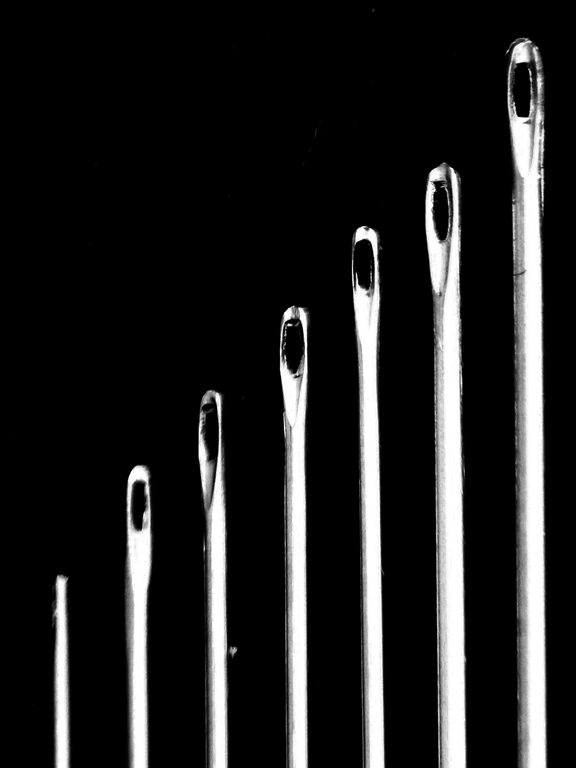
The needles might go in for b&w trophy. Got a chance at least.

Friday, October 28, 2011

...and it is all -ober!

The judging for projected images this month was fairly tough. A lady who was quite forthright that a good part of her assessment was subjective only awarded three Honours over the three grades and two of those to A Grade. I can not dispute her assessment of my two images, particularly given her starting point. The difference between depicting “Dance” as a topic and the depiction of “movement in dance” that came from at least three other entries, and my attempt to convey the “energy” involved became something of a theme for the evening. I think I was given “Merit” for both. That equates pretty much as “average”.

That was followed by a brief exposition on histograms, DR, and the difference between visual sensitivity and mechanical sensitivity. Interesting, especially since it explained something that I had not been able to work out. I generally shoot in RAW and have found that sometimes the extreme ends of the histogram contain unexpected detail. The reason you will see, no doubt, is that the JPEG version has sensitivity of just four stops. The RAW file is sensitive to about 1.5 stops either side of the JPEG range, giving a total of roughly 7 stops between total black and total white. Hence the DR of a RAW image can be expanded simply by wringing the two ends of the histogram out into the “middle” portions of the extremes on the JPEG scale.

The reshoot of the mask series has been redone. I have looked at the results briefly. There are issues that need to be resolved – and in the following order -

The quartz-iodide 500W tube I am using for lighting is completely OTT. Far too hot. I don’t want to have to get filters to correct so I am going shopping for eco-bulbs which I have discovered carry a K rating. The ones we use for lighting at home are generally 4500K, much less yellow than the QI tube but still well below sunlight. I know there is a 5500K range as I have seen it mentioned several times. I need go look.

I need to develop a means of stretching the backcloth over its width at tabletop height. It will work quite well as a backing but it is getting shade variations still – quite badly. At this stage I think a couple of loop tags sewed carefully to the edge on each side will suffice. CF or dowel stretchers to follow. Rolling the cloth onto a larger dowel works well. Happy with that I am.

The camera needs further “investigation”. I need to find the manual and read up on the multiple exposure function and whether it includes automatic compensation for the number of exposures. Being film and not digital I can not blame the camera for “averaging” if I am using it on Manual. I tried spot metering this time on the black. I seems to have made some difference, but not enough as the backcloth did not burn out as I wanted.

I just went took a look back over the last couple of months. One of the things in my head that might help with this whole problem of getting the multiple exposures how I want them is actually to backlight the backcloth – put lights behind the backcloth, effectively turning that part into a direct softbox..

The other thing that needs consideration is that of shadows. With only the one strong light, I get a fair shadow on the opposite side of the object. Absolutely not needed. So if I get the 5500K bulbs, I will need about 1500 watts worth – 1000w from the back, 250w each side. I also have in mind the construction of a softbox. That would not resolve the shadow problem but might help in the overall lighting scheme.

I am also trying to determine the actual difference between the various settings – rough eyeball judgement of the negs is not sufficiently accurate. I am going to use a borrowed Dimage scanner to get the film onto disc so I can play around with it.

Monday, October 17, 2011

Oct -

OK, so it is October already. The past weekend has been spent setting up for this month’s competition; set topic is “Dance”.


We (SWMBO and probligo) went to Atamira this year, it being 2 years since we last went. Atamira is a presentation showcase of Maori art, craft, culture, the whole kete and caboodle. We went on Sunday, as Saturday was too much of a panic to fit SWMBO’s pre-determined timetable. That was a pity because I wanted to be there for the final rounds of the hip-hop dance competition. We had looked in two years back and spent about 15 minutes in the theatre before being overcome by the sound level. Now that SWMBO is getting to join the hard-of-hearing brigade that should not have mattered quite so much. However it was not to be. We stopped by the theatre for a while to listen to Miss Black – Whirimako’s daughter – who is a good club singer but not in the same league as her mum. Yet.


So, that source of images went past without any result.


Back to the library.


Last year we went to the Diwali equivalent of Atamira; substitute Indian and you got it. That is the source for the photo I am putting in to club. It is far from perfect; there is a very large stagelight that gets in the way. Hence the cutout vignette rather than the dodge. I have learned the difference between PS “cookie-cutter” and “layer motif”.


The Taranaki portrait is from the library; this one is from 5 images, taken about 10 minutes prior to the stretch landscape I posted previously. This has not been shopped other than to stitch the image.


While at Atamira, I took a series of pictures of a young guy who was carving a tekoteko (stylised full figure). It bears a fair similarity to Pukaki, who was one of the centre taonga in the Te Maori exhibition that did the tour to New York and other cities in the States in 1984. I have to say that I was impressed by his work. This time I asked for permission to take photos; yes, there is a first time for everything!! He agreed and I am most disappointed with the result. The first three, where he was working face-to-face with the teko I did not realise that he had his chisel - sorry gouge – stuffed up a nostril. Edifying, NOT!! My attempts at flash photo were amazingly underexposed. Don’t know what went wrong there. I will have to look at the metadata to find out what I done. I suspect that I was using a pre-set aperture but don’t know for sure. They look as though the flash was missed. There was another chappie I stopped and spoke to – SWMBO was having a cup of coffee down at the kaumatua’s lounge. He was making tiny – I mean about 20-30mm wide – kete from very fine harakeke flax. Beautiful work. He did NOT want his photo taken. Given the standard of my other efforts I glad that I did not. I also came across a woman who was making taniko cloth – small samplers was all. That is something I have watched being done before but it is one of the “lesser” arts and does not get much publicity as a result. I am fortunate to have a taniko belt my mother made – it was her only attempt and she found it very frustrating to finish.


I have not yet re-shot the mask series. The mood in the camp has not been conducive. I might have yesterday but gardening got in the way. There is not a lot that is interesting in digging cooch out of a drying bed of freesias and granny-bonnets. My version looks like the pigs got in and turned the plot over.

Thursday, September 29, 2011

...mber

And so another month drifts quietly to a close. Actually, I have to admit, it turned out to be not half bad in some respects. Primary among the reasons for the good part was the birth of Kath’s twins. That resulted in yt having the house to himself for about 8 days of total self-determination. That status started with the drive back from New Plymouth, which was interrupted along the way by a number of “unscheduled” stops. The remainder of the week was accompanied by watching a bit of rugby. One of the highlights was the U20 and NRL second Minor Finals with Old Dark in one hand and rum in the other. The Sydney league semi was not broadcast or nothing would have got done on Sunday either.


The Awakino Head was probably the highlight of the trip back. There is potential there for some spectacular coast scenery – but very little else truth be told. The beach at Mokau similarly.


Thought about heading up the old timber road from Mokau to Kawhia and Raglan. Dropped the idea when leaving Mokau as the belly was calling for lunch. Tried The Fat Pigeon in Piopio – it was OK but Bosco’s in Te Kuiti is better.


The last Sunday of freedom was mis-spent on re-shooting some of the old attempts at art. I now have a 3m x 1.2m “infinity sheet” in the form of a very nice piece of cotton duck. Next thing to purchase is a 1.2m rod on which to roll it so I do not have to borrow the SWMBO’s flatteninghotter. I used only natural light in the family room.


Which leads into the competition for this month. Judge was another of the senior members – I will stay with my protocol of “No names…”. I had to try and find out just where he was coming from before I started writing this. Interesting cove he is; high-powered member of the club, and in the IT world as well. He is a very respectable photographer as one might imagine.


The pyramid was given “acceptance”, mainly because it did not grab him. He was very up-front; the type of image that it is lies completely outside of his personal taste. Can’t argue with that.

Poor Leo. He was recognised as “large”. The wording fitted the image. The very big defect was that the back of the chair was in focus. Never mind… not all of us have studio soft-boxes that we can trot out at a moment’s notice for that perfect candid shot of a comparatively bad-tempered cat.

The evening ended with a totally unexpected and very unusual experience. I got “chatted up” by a 60-something lady (a member). It was quite un-nerving in some respects. Oh, there was never a hint of anything untoward but the flirting was apparent; even to this old numbskull. Sadly, she is not really my type.


Going back to the pyramid and the mask for a bit, and my re-shoot of the mask.

The image out left is (from top to bottom); test and control for print, f5.6, 1/10; f5.6, 1/20; f5.6, 1/45. This was shot indoors, ambient light only. The three frames are on a single scan, no modification or treatment.

First thing to note is that there is not enough difference between background and object. Simple solution to that is to add light. That will be the next attempt. That will also take out the fold shadows that are all too obvious.

The other thing is the lack of difference between frames 2 and 3. This points up something I have battled for years. If you understand your digital camera you will know that it will - if set on auto - do its utmost to turn everything it sees to an average muddy grey. Commercial printers are no different. They can take a mediocre image and make something out of it. I know. Been there...

Some many years back - over 15 years back - I spent some six months cultivating a (strictly professional) relationship with a lass in the local pharmacy who had been given the job of running the automatic film processing part of the business. We both learned a heck of a lot about how that machine worked.

I know that those three frames (and sadly the rest of the film) can not be rescued.

But ... they can be re-taken.

Tuesday, September 20, 2011

septe

Been a busy month, this. As something of proof, daughter sent us this of the latest additions to her family and the ol' probligo's (now probbly completed)small host of grandchildren.


That took a week or so out of the beginning of the month, if only because the missus was stressed out from the last week of August until the event was over. Then the stress level rose to extreme until packing and travel had been sorted. I got a small number of frames on the way back that might be mildly interesting. I have the coming weekend available for project work before the missus gets back Monday.

So, I have been able to sort adequate entries for club this month -


Set subject this week is "domestic pets". I was tempted by a photo of a rock but decided that tempting judges had gone far enough for the while. Stick to the menu lad.


On the other side, however, I turned this out of the library last week. It is in the same mould as the mask...


I wish I could work out how Frank does his virtual masques and frames.


Oh, the cat? No, he wants it known that he is not fat.

Just big!

All 6.5 kg of him.

Tuesday, August 23, 2011

Not so august?


I have to say that “White on White” is definitely not easy. Attached are before and after of the attempt I put in to club. Confession – the after is “temperature adjusted”, screwed up on the brightness scale by about 60% and converted to black and white, then taken down for the print by 2 stops.


Does it work? We will find out next week.


Went to the final installation of the Grade 2 course the club has been running. Lying around was a print fairly similar to the idea I have been following. Spoke to one of the notables who promptly claimed ownership and said that it had got rubbished at the print night competition the previous night. Oooo-K! Good start that is. I did not press on the point, but if the print was as submitted I can think of two very good reasons why – not the least of which was the cropping as it was marked on the print I was looking at. Given that, my attempt will be lucky to get Acceptance, pushing hard for Merit.


For the open I am beginning to get a bit desperate. At this stage the breaking wave is winning – I might crop that to a 19:6 or thereabouts to take out all but the wave itself. Looking at that on-screen with the blinkers on it might just work for a HC.


The course final night was quite a good evening. In most respects. Out of the ten or so taking part most were a pretty good crew; a police forensic photographer, a retired lady whose husband has very bad Parkinson’s, a lass who is almost blind (and takes a mean photo), a couple others who are better than I am, and the rest. Well, let me limit the rest to just one gentleman. Best illustration of his attitude came toward the evening. There had been a discussion on bulb exposure for fireworks – up to 30 secs. I could not recall if the Lumix had a bulb setting so I tripped through the “snow” to the car and took it inside. No, it does not have a bulb setting; maximum exposure is 8 secs. I was just ruminating this with the person I had been talking to and a voice behind gives a sniff and says “You could not get a decent image with that. Buy a proper camera.”

UPDATE -

The two entries - both Merit. Well, not as bad as some that were rejected as not meeting "White on white" requirements.

The major objection to the vases was "over-exposed". The judge was one of the tutors from the classes and I have to say that he is right. It was not in the camera though as comparison of before (I must find out what caused the white balance to go that way...) and after. There was an intermediate which I rejected because it was too clear; the idea I had was to get the vases to "disappear". Strange.

Image of the night was without doubt presented by another C Grader. Absolute perfection as a product publicity shot; good enough for Vogue even. It will be up on the club site next month.

Tuesday, August 9, 2011

Starting Au-gust..

I am in a quandary.

The set topic for this month is “White on white”. The print competition was last week, and I did not go to club that night. I have this horrendous joke about “monthlies” that would go right over the heads of some senior executives (especially if they have worked for EMA) but which even SWMBO appreciates even if she doesn’t like the tone of the humour one bit. In my case the monthlies strike, without fail, in the last two working days of every month and the following three working days. It is not driven by glands but the need to report to powers-that-be at higher levels of the company by whom I am employed. This need results in emotional and hormonal responses that take out the best part of that week.

As I said, the print competition was last week, and I was not there to see what was going on. I had a brief natter with another member on Tuesday night and was given a rough description of white flowers over white background; kind of thing.

So, why the problem? I know what I want to do. I have had a couple of goes at it and it has not quite worked for me as yet. Yes, it involves white on white; white crockery on white table to be exact. Well, I want the crockery to “disappear”, blend with the tabletop, leaving the tea/coffee, toast and poached egg – with hollandaise if SWMBO wants it. Place the cutlery so that the outlines of the crockery are hinted but not seen… It can work, if I can get sufficient blend between crockery and table without burning the image out by pushing the white too far up and without excessive reflection from the cutlery. So the problems are –

Finding sufficiently white crockery
Removing all shadows and retaining a semblance of depth
Removing the reflections from the cutlery
Interrupting Sunday breakfast long enough to set up the photo.
Not taking so long that SWMBO's egg gets cold

For the open competition? I haven’t really given that any thought. There are a couple of half decent images from Niue I could test the water with. There is a portrait of a senior club member which might go – taken at the last “class” evening when we were playing around with studio and lighting. There are a couple of architecturals which might fit the bill. None of them grab really the goulies.

I have a m-lemma.

Tuesday, July 26, 2011

The rest of July...

A week in the tropics is all that is needed to get the ol’ probligo over the edge of troppo. Came back from Niue absolutely convinced that the Tuesday week was competition night at club. Worry lines crumpled the probligo countenance when the email revealed no evidence of an acknowledgement of his two entries for competition. Come the next Thursday when entries close and still no mail!!!! Panic!!!

What a silly old duffer I am. Wrong week; the competition was last night, a week later than I thought.

Now. How do I put this. Judging started with C Grade Open. A quick flick through the entries first, and the mask is the last of some 10 entries. Tenterhooks!!! The last three before mine earn Honours. Good images, too. The mask flicks on-screen; and the judge says “Only one word – Honours.” I must retake that image, if only to prove to myself that I can do it again; that it was not a fluke. Besides I need to set myself up with an infinity sheet – a good one - as well.

Then on to Set Subject. Same process, except that mine is about 5th of 8 or so entries. “Good to see someone thinking outside the square.” The difference between Highly commended and Honours? The little one on the end “looking” to the side. Thanks SWMBO, good idea and worth the effort.

End of the night comes and those present are starting to get restless after an exposition from worthy judge on flash; interesting ideas but how do I get a Sony system flash?? Thought required – mainly how to rob banks. Hang on, we forgot to nominate the night winners. C Grade image of the month – the probligo’s mask.

So, there y’go. In the club for six months and a winner already… Hard act to follow, that one.

Niue was a joy. Innumerable challenges. From caves including stalagmites and stalactites to hard tropic midday, deep shadow to early morning and late evening colours, HDR to soft monotones.


Wednesday, July 6, 2011

July will be a short month...

... because the ol probligo and Mrs probligo are heading north for a week. Being empty-nesters does have the advantage of providing a little extra from time to time - usually ever second year or so - so that we can at least give the pretence of a higher level of social standing than we actually enjoy. So for that reason, we are heading this year to the general vicinity of the equator to a place known localy as "The Rock" and in other places as Niue.

This being the case, and having had the good fortune to have listened (for once) to the opines of Mrs probligo, I have already sorted the entries for this month's projected image competition at the club.


The set topic for this month is "Eyes" and I credit the missus for this idea. Taken with +4 and +2 diopters, RAW file against a black card background. Post camera processing was limited to knocking the black up by three notches to remove the texture of the card, knocking the highlights back by a similar amount, and converting to b&w to remove the (quite bad) chromatic abberation.

While setting it up it reminded me a little of the old school photo and hence the small one on the end with his attention diverted elsewhere...


I will let the reader sort this one. It is scanned from a photo I took about two years back; one of a series that I intend taking up again.

Post scan processing is limited to masking out the horizon line because I was not using an infinity sheet. It was going to be my entry in Set but it is heading for Open instead.

Tuesday, June 28, 2011

The rest of June -

There are only a few days left in the month, and next month will be fairly busy so I will wrap June up here and now.

There was club last night, with the competition for projected images; set subject for the month was “contre jour”. For those who know, please ignore the next para while I try to explain exactly what that means…

“Contre jour” means “against the light”. A good c-j image will combine three essential elements –

Strong back light.
Visibility of detail in the subject (not a silhouette).
A measure of halo around part, or all, of the subject.

Judge for the night was a (high-standing and well qualified) club member. I give her credit for being fairly gentle with those who submitted entries in C Grade and missed the boat. The B Grade entries had made a quite better effort, I think that only two out of the eight entries were “accepted” due to not meeting the requirements of c-j images. When it came to the A Grade entries, she did not quite have the gumption to follow through on an initial comment that a person at this level should be able to correctly meet the requirements of a c-j image. To award “acceptance” to a disqualified image at the top level is almost dishonest. To make matters worse, it was not a single entry that failed the compliance test but almost half of those eight or so images presented.

The real disappointment about last night’s competition came in the Open section and centres on two, perhaps three images.

There is a fashion in these recent times for a whole raft of image types – yes I have been here before – that in the past might have been classified as “out of focus” through to “very bad camera shake – should use a tripod” to be lauded as “Impressionist” images. The other euphemism, one which is somewhat more tightly defined now, is “Minimalist”. I gave a brief report on a local exhibition, an ex-member of the club, that we went to take a look at earlier in the month. The standard of his– as “Impressionist” – images was several blocks ahead of the efforts at last night’s meeting. Given what was presented last night I could actually consider his as praiseworthy.

“Impressionist” as a descriptive term has a very well defined meaning in the world of fine art. It is a classification that centres on the work of a comparatively small number of people over a similarly short period of time in the mid to late 19th and very early 20th centuries. Names such as van Gogh, Renoir, Monet, Manet spring immediately to mind. I read some while back, a book or article concerning the sight problems that some or all of these artists suffered. Van Gogh for example suffered from glaucoma. The internal pressure that distorts the eyeball creates focus problems and this has been used to explain the “Starry starry night” as just one example. He also took digitalis as a control for the epilepsy he suffered. Looking at Wiki it seems that digitalis causes a persistent yellow coloration to the sight. The original article (from far-off recollection) listed about six of the Impressionists) all of whom had a problem with vision – possibly including such rarities as synaesthesia. Just how accurate these interpretations (and my recollection) are, is of small importance.

I give credit to those who tried to create "Impressionist" images, and their efforts were rewarded with “Merit” and one “Highly Commended”. One image which did deserve the tag of “Impressionist” had as its subject the reflection of two people having a conversation. The reflection was on the side of a brewing vat with consequent distortion of the scene; the whole image being very well managed indeed. It was not until the image was explained that the full impact of the technical side became apparent. It surely deserved the accolade of “Honours”.

I can but wonder what might be thought by a competition judge of an image, badly out of focus or using an astigmatic lens with a yellow filter. Perhaps that is worth a try – title “After van Gogh”.

The more formal part of the evening over, one of the senior members gave an exposition on the topic of depth of field and focus. Those with mathematical bent might find some interest here if google is prepared to play ball. I have looked through that and the eyes glazed over after the first para or so. As did the majority of those present last night at club. No question that the presenter knew exactly what he was talking about, and trying to explain. His explanation was simple enough but would have left many floundering in the shallows. One thing that I did work out - why a pinhole camera has infinite (or very near) depth of field. It has to do with the length of the lens, its focal length and possibly one or two other things. A pinhole has close to zero length - decimals of a millimetre in a good one. That seems to be (from what I could make out last night) why a pinhole is so... Oh, and I might try and get a copy of that "Focus Encyclopedia".

Tuesday, June 21, 2011

For the solstice...

I came across a book in the library last month, somewhat by chance, that is proving to be of more than passing interest. It is biographical, not in the usual sense but as a collection of papers, essays and letters. An instance that caught the eye and the mind at once -


Photography as a fad is well-nigh on its last legs, thanks principally to the bicycle craze. Those seriously interested in its advancement do not look upon this state of affairs as a misfortune, but as a disguised blessing, inasmuch as photography had been classed as a sport by nearly all of hose who deserted its ranks and fled to the present idol, the bicycle. The only persons who seem to look upon this turn of affairs as entirely unwelcome are those engaged in manufacturing and selling photographic goods. It was, undoubtedly, due to the hand camera that photography became so generally popular a few years ago. Every Tom, Dick and Harry could, without trouble, learn how to get something or other on a sensitive plate, and this is what the public wanted - no work and lots of fun. Thanks to the efforts of these persons hand camera and bad work became synonymous. The climax was reached when an enterprising firm flooded the market with a very ingenious hand camera and the announcement "You press the button, and we do the rest." This was the beginning of the "photographing by the yard" era and the ranks of enthusiastic Button Pressers were enlarged to enormous dimensions. The hand camera ruled supreme.


Before you run into the distance, think "digital camera" in the place of "hand camera" and you would have heard some ten or fifteen years back the exact same sentiments echoing through the august halls of probably every camera club in the land.


In 1890 when I returned to America I found that photography as I understood it hardly existed; that an instrument had been put on the market shortly before called the "Kodak" and that the slogan sent out to advertisers read, "You press the button and we do the rest." The idea sickened me.
...
Finally one day I met a middle-aged stock broker by the name of W.B. Post who had just returned from Nassau. He showed me some four-by-five prints he had made. I was amazed. They were beautiful.
...
He asked me if I did not want to try out his camera. The temptation was too great to resist. I had certain things in mind that I knew could not be done with the large camera and tripod.

So in 1892, in February, there was a great blizzaed. I loved snow, I loved rain. I loved the deserted streets. All these seemed to attune to my own feeling.

During the blizzard I stood at the corner of Thirty-fifth Street and Fifth Avenue with Post's camera. I had watched the lumbering stage-coaches appearing through the snow; the horses, the drivers, the driving snow - the whole feeling - and I wondered could what I felt be photographed.


The resulting image you will probably find on the net if you search "Winter - Fifth Avenue" and "Stieglitz". And those dates are not typos. This was in the 1890's and Stieglitz was one of a number primarily involved in the establishment of photography as a practical technology and as one of the arts.

The emotional strength of Stieglitz's campaign is illustrated best by a letter written in 1942 - a few years before his death - following a request that he contribute to an exhibition to be toured to Army corps on active duty. The request stated that there could be no guarantee that prints sent would be returned, and that mounts were to be standardised. Stieglitz's reaction -

I have your communication of January 12th. What am I to say? In a sense I am horrified.

First of all, I am not qualified, according to your letter, to contribute a print, as I have not as yet become a professional photographer. But even if I ignored this, what I might look upon as a "slip", I could not possibly send you a print of mine as I have spent my life in fighting for the recognition of photography as an additional medium of expression ranking with the other media of expression such as painting, etching, lithography, drawing, etc., etc.

You seem to assume that a photograph is one of a dozen or a hundred or maybe a million prints, all prints from one negative necessarily being alike and so replaceable. But then along comes one print that embodies something that you have to say that is subtle and elusive, something that is still a straight print, but when shown with a thousand mechanically made prints, has something that the others don't have. What is it that this print has? It is certainly something not based on a trick. It is something born of spirit, and spirit is intangible while the mechanical is tangible. If a print that I might send did not have this intangible, what would be the value of sending it out?... I might just as well say that any machine can take a picture, and turn out a print mechanically. You might get a wonderful picture as a result, but they would not contain that something called love or passion, both of which are required to bring forth a living print - or any other living creative expression. A print lacking these elements is simply an illustration.


Stieglitz should be recognised as one of the unsung heroes of the photographic world. Not for his skill as a photographer - in his time he was a leading technician as well as artist. Not for his unending fight to have photography added to the visual arts - a battle that has finally waned in the past generation or two.

He deserves recognition as an artist of light, an artist of the ordinary in extra-ordinary light, his ability to record emotion in two dimensions.

And I shall return to my practice of making illustrations...

Friday, May 27, 2011

More of May...

Being Saturday, the probligo and SWMBO went to the library, shopping (fresh greens etc for the weekend and a bottle of wine) followed by lunch out (that is not ordinaire!) and a visit to Uxbridge. A word of explanation on the latter. Uxbridge is the local arts centre, based on one of the old church halls. Presbyterian, I think. Occasionally they have some really worthwhile things going and this was the reason for today's visit.

An ex-member of Howick Camera Club, one Derek Penlington, had a display of some of his more recent work. He has been working in long-exposure landscapes; movement of the camera; multiple exposure. Interesting but, I have to say, a rather limited range. There were perhaps four sequences of (similar) images; a seagull in long and multiple exposures; wave-break (surf); kaihikatea swamp; an autumn scene. Good images, nothing particularly amazing. I thought that there would be far greater impact if he had taken the same image in bright light, with bright colours, and used ND filters to lengthen the exposure. There - something to try.

Like this as an example -

Not as extreme as Penlington - nowhere near. But the idea of a passing autumn breeze is (I think) very well conveyed at 1/15 as against 1/250.