It was interesting at club Monday. My prediction of a fairly low score was fully borne out by a HC in Set and Merit in Open.
The judge’s reaction to both was interesting; indeed her reaction to many of the images could be described thus.
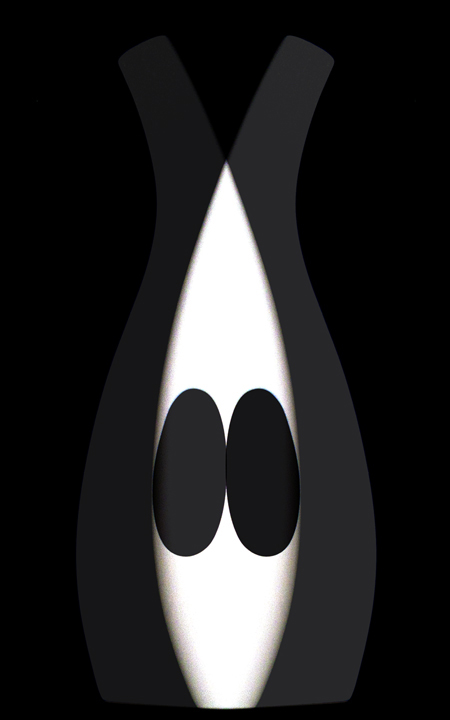
She “did not understand” the Set entry. The shadow met with approval, but there was nothing in “her story” to explain the sharpness of the left side of the image. So, let me explain. Reading from left to right – which is why I rotated the image 90* left – there is the very sharp, and threatening, claw shape that grows out of the “background”. The shadow that it casts is of a fern – exactly as the sculptor intended – a gentle and soft plant that grows in the shade of others. To the right there is the series of diagonal parallel shadows which introduce a sense of instability. Those same lines create a barrier to the right, visually pinning the fern in the middle of the frame. The base of the claw and the fern are joined at the edge of the frame, indicating their direct connection.
I have no idea if the story I have read into the sculpture was intended by its maker but the image for me is direct and powerful. There is a danger in beauty; there is often a very visible but unrecognised cause to both. It might be surf and rocks, such as at Piha or Muriwai; it might be calm water and powerful currents, such as Tory Channel or the entrance to Hokianga, or a deep hole in a river. If you want you could even put a political slant on it; if that rings your bell then go for it.
The reflection was even worse. I think she recognised the image as being a reflection. It was not in her story that the people were looking at the objects floating there. The fact that they were created to look like flowers was missed. There was just no recognition at all. So between me and the person who made the sculpture we completely lost the judge. There was just no connection. The puns are almost multitude: reflection; it is, the three people in the reflection are reflecting on the “meaning” of the flowers in the water; flowers; artificial or not, flow-ers; flowers grow in a garden; is this a water garden, it is also the Botanical Gardens; and so it goes.
Or is my mind just too far bent for others to pick these things up?
I have to credit the judge with making the distinction between an “impressionist” image and a plain bad frame. In question was a picture of a family picnicking under a very large tree. As you can imagine, there was lack of focus and/or presence of movement. There was also a measure of manipulation in the image as well to burn out other detail. Not well enough burnt out in the judge’s opinion. It would have been better had the frame been deeper exposed in order to take out the houses etc in the background. I agree. It is a matter of how you do it; in camera, or in computer is the question.
One thing I have learned, and must remember, is the use of “Vaseline filters”. Good thing with which to play around. Also coming out of the comments last night is the difference between “form” and “texture” and “intensity”. This latter came from an image which, in the opinion of the judge, would have been better in black and white rather than colour. It was a very wide angle of a room in a photo exhibition. It was blurred and swept as one might expect.
One last comment. One of the images presented by an A Grader was of two surfers on a wave. Time of day appeared to be dusk. The image was manipulated by the addition of gold light on the crests of the two waves. This met with warm approbation by the judge. There was one problem. The light was – quite obviously too – from behind the surfers and the waves, as the front of the surfers was not similarly coloured but were in shadow. How come then that the front of both waves carried that gold light. The intensity of the colour was too deep as well. There was no blue, emerald, gold fade in though the blue-yellow boundary had been feathered. Sometimes judges can be as imperfect as can I.
Also out of the same evening comes the question, "Is this a competition on image manipulation, or expertise in obtaining and presenting photographic images?".
Tuesday, February 28, 2012

Friday, February 24, 2012
So the year begins...
Ahhh, time of joys, of the long late summer, and the commencement of the competition scene at club. That latter prospect has improved through the presence of a good mate who has decided to join the club this year (as a “beginner” naturally). The improvement will come from the occasional debate that we may have concerning things photographic.
F’rinstance, a question regarding the nature of “photographic images” was debated over the tea-cups one afternoon this last week. The question arose from Rules 2 and 3 -
Seems straightforward enough, huh?
I looked long and hard at Rule 2 last year for the “White on white” set competition. I had a white feather – collected from one of my sister’s chooks I think – which I tried scanning with a white background, only problem was that the scan came out somewhat more yellow than I had imagined and the idea was dropped because of my inability to clean the image for consideration. But the question starts at that point – an “image” taken with a scanner? The output is a “digital file”, no?
Consider the use of a digital file taken from a scan of a film image. Is this in any way different to a print taken from a digital file for print competition? That is easy – the answer is “No!”. The premise here is that the image was originally captured using a camera. One can argue the same for an image captured using an iPad camera or phone camera. Equally as valid, equally a “photographic image”.
So, why the objection to an image from a scanner? There is no lens? I believe that the lensing and sensing functions in a scanner would be quite complex. In fact quite as complex as a digital camera in fact. That became a particularly unfruitful moot.
The application of “no areas added that were not exposed” in Rule 3 is comparatively straight-forward. There is a small matter of detection involved. Primary in my mind when I say this is an image that was presented in competition last year under the “photo-journalism” heading. It was of a crowd, either Japanese or Chinese, all looking in the same direction, all dressed in what I would think of as late 50’s or very early 60’s clothes; suits, hats. The overall feeling that I got from it was of immediate post-war Japan. There is no way that I could get any proof, but I had the uneasy feeling that I was looking at an image from the ‘Net rather than the person presenting it, and dating from some 50 years BP rather than being an image from current times.

I am not going to allow the year to get off to a bad start with the prospect of the "Abstract/Concept" as the set topic this month. The judge has been named and to give an indication of what she might expect. Sorry, mine is going to look like this -
I had a long struggle with which to offer as the Set topic. I chose this as the Open entry -

Both images were taken last month at the Auckland Botanical Gardens.
F’rinstance, a question regarding the nature of “photographic images” was debated over the tea-cups one afternoon this last week. The question arose from Rules 2 and 3 -
2. An entry must originate from a negative, colour slide or digital file that was exposed by the contestant.
3. An entry may be manipulated in any way provided no areas are added that were not exposed by the contestant.
Seems straightforward enough, huh?
I looked long and hard at Rule 2 last year for the “White on white” set competition. I had a white feather – collected from one of my sister’s chooks I think – which I tried scanning with a white background, only problem was that the scan came out somewhat more yellow than I had imagined and the idea was dropped because of my inability to clean the image for consideration. But the question starts at that point – an “image” taken with a scanner? The output is a “digital file”, no?
Consider the use of a digital file taken from a scan of a film image. Is this in any way different to a print taken from a digital file for print competition? That is easy – the answer is “No!”. The premise here is that the image was originally captured using a camera. One can argue the same for an image captured using an iPad camera or phone camera. Equally as valid, equally a “photographic image”.
So, why the objection to an image from a scanner? There is no lens? I believe that the lensing and sensing functions in a scanner would be quite complex. In fact quite as complex as a digital camera in fact. That became a particularly unfruitful moot.
The application of “no areas added that were not exposed” in Rule 3 is comparatively straight-forward. There is a small matter of detection involved. Primary in my mind when I say this is an image that was presented in competition last year under the “photo-journalism” heading. It was of a crowd, either Japanese or Chinese, all looking in the same direction, all dressed in what I would think of as late 50’s or very early 60’s clothes; suits, hats. The overall feeling that I got from it was of immediate post-war Japan. There is no way that I could get any proof, but I had the uneasy feeling that I was looking at an image from the ‘Net rather than the person presenting it, and dating from some 50 years BP rather than being an image from current times.

I am not going to allow the year to get off to a bad start with the prospect of the "Abstract/Concept" as the set topic this month. The judge has been named and to give an indication of what she might expect. Sorry, mine is going to look like this -
I had a long struggle with which to offer as the Set topic. I chose this as the Open entry -

Both images were taken last month at the Auckland Botanical Gardens.
Monday, December 19, 2011
2012
As much a diary entry for myself as anything...
Feb Abstract concept
Mar Seaside / Coastal
April Reflections
May Flowers
June Wild thing Set of 6
July Fishing
August Night life Group of four
Sep Traffic
October Macro
November Environmental Impact
OK, they are the club set topics for next year!
Feb Abstract concept
Mar Seaside / Coastal
April Reflections
May Flowers
June Wild thing Set of 6
July Fishing
August Night life Group of four
Sep Traffic
October Macro
November Environmental Impact
OK, they are the club set topics for next year!
Saturday, December 3, 2011
Well, I guess that is pretty much the year gone...

The end-of-year hooley at the club is tomorrow night. I have two entries in for C-grade "image of the year". Of the two, the Mask is my sentimental favourite.

There was a request for images from field trips and activities as well. The only thing I have been involved in during the year was the (very well organised, run and helpful) intermediate course. At one of the final sessions we had a short studio session with one of the leaders as a very willing model. It turned out I was one of only three who had brought cameras that evening. This was the last frame -

Of the November entries - the face painter got HC, taken down by the lettering on the jacket; the alien was a different one (below) which also got an HC. I know that I will not be getting highest points this year.
The programme is out for next year - some interesting thoughts...
UPDATE -
The end of year hooley was held last night. As expected the ol' probligo won nothing. He did get promotion to B Grade for digital images from next year. That ups the ante a bit, but don't expect any great changes in approach.
The photo of the "elder" taken at the course was shown. It was met with a quiet "Bloody hell! Where did that come from!!". Frank and I had a brief chuckle over it after the formal sessions.
Actually, I have to concede that the doors did open a little on the night. Several people were happy to stand (or sit) and converse. No, I was very careful to not dominate the proceedings. For example I learned that one was looking forward to a holiday skiing in Canada. I suggested the he take a look at Pohanginga Pete's pages of his trip to Chile. Take a look anyway and be prepared to be awestruck at the beauty of what he has seen and successfully recorded.
Time to go for this year. Been good. See ya next month.
Saturday, November 12, 2011
Nove is coming...
Ye gods!! Almost the end of another year.
I have to consider this month's entries, and what is going up for end of year comps. In one respect one is driving the other.
One of the year-end comps is "Set of Four". Four images from entries to the monthly competitions. At least, that is how I read it. So this is what is going in...


So that sets the Open entry for this month.
The set topic for the month is "Street Culture". To get right to the chase, this was the best of what I got from the library. Taken 2009 in Howick it were...

So there it goes.
There are other comps.
The needles might go in for b&w trophy. Got a chance at least.
I have to consider this month's entries, and what is going up for end of year comps. In one respect one is driving the other.
One of the year-end comps is "Set of Four". Four images from entries to the monthly competitions. At least, that is how I read it. So this is what is going in...


So that sets the Open entry for this month.
The set topic for the month is "Street Culture". To get right to the chase, this was the best of what I got from the library. Taken 2009 in Howick it were...

So there it goes.
There are other comps.
The needles might go in for b&w trophy. Got a chance at least.
Friday, October 28, 2011
...and it is all -ober!
The judging for projected images this month was fairly tough. A lady who was quite forthright that a good part of her assessment was subjective only awarded three Honours over the three grades and two of those to A Grade. I can not dispute her assessment of my two images, particularly given her starting point. The difference between depicting “Dance” as a topic and the depiction of “movement in dance” that came from at least three other entries, and my attempt to convey the “energy” involved became something of a theme for the evening. I think I was given “Merit” for both. That equates pretty much as “average”.
That was followed by a brief exposition on histograms, DR, and the difference between visual sensitivity and mechanical sensitivity. Interesting, especially since it explained something that I had not been able to work out. I generally shoot in RAW and have found that sometimes the extreme ends of the histogram contain unexpected detail. The reason you will see, no doubt, is that the JPEG version has sensitivity of just four stops. The RAW file is sensitive to about 1.5 stops either side of the JPEG range, giving a total of roughly 7 stops between total black and total white. Hence the DR of a RAW image can be expanded simply by wringing the two ends of the histogram out into the “middle” portions of the extremes on the JPEG scale.
The reshoot of the mask series has been redone. I have looked at the results briefly. There are issues that need to be resolved – and in the following order -
The quartz-iodide 500W tube I am using for lighting is completely OTT. Far too hot. I don’t want to have to get filters to correct so I am going shopping for eco-bulbs which I have discovered carry a K rating. The ones we use for lighting at home are generally 4500K, much less yellow than the QI tube but still well below sunlight. I know there is a 5500K range as I have seen it mentioned several times. I need go look.
I need to develop a means of stretching the backcloth over its width at tabletop height. It will work quite well as a backing but it is getting shade variations still – quite badly. At this stage I think a couple of loop tags sewed carefully to the edge on each side will suffice. CF or dowel stretchers to follow. Rolling the cloth onto a larger dowel works well. Happy with that I am.
The camera needs further “investigation”. I need to find the manual and read up on the multiple exposure function and whether it includes automatic compensation for the number of exposures. Being film and not digital I can not blame the camera for “averaging” if I am using it on Manual. I tried spot metering this time on the black. I seems to have made some difference, but not enough as the backcloth did not burn out as I wanted.
I just went took a look back over the last couple of months. One of the things in my head that might help with this whole problem of getting the multiple exposures how I want them is actually to backlight the backcloth – put lights behind the backcloth, effectively turning that part into a direct softbox..
The other thing that needs consideration is that of shadows. With only the one strong light, I get a fair shadow on the opposite side of the object. Absolutely not needed. So if I get the 5500K bulbs, I will need about 1500 watts worth – 1000w from the back, 250w each side. I also have in mind the construction of a softbox. That would not resolve the shadow problem but might help in the overall lighting scheme.
I am also trying to determine the actual difference between the various settings – rough eyeball judgement of the negs is not sufficiently accurate. I am going to use a borrowed Dimage scanner to get the film onto disc so I can play around with it.
That was followed by a brief exposition on histograms, DR, and the difference between visual sensitivity and mechanical sensitivity. Interesting, especially since it explained something that I had not been able to work out. I generally shoot in RAW and have found that sometimes the extreme ends of the histogram contain unexpected detail. The reason you will see, no doubt, is that the JPEG version has sensitivity of just four stops. The RAW file is sensitive to about 1.5 stops either side of the JPEG range, giving a total of roughly 7 stops between total black and total white. Hence the DR of a RAW image can be expanded simply by wringing the two ends of the histogram out into the “middle” portions of the extremes on the JPEG scale.
The reshoot of the mask series has been redone. I have looked at the results briefly. There are issues that need to be resolved – and in the following order -
The quartz-iodide 500W tube I am using for lighting is completely OTT. Far too hot. I don’t want to have to get filters to correct so I am going shopping for eco-bulbs which I have discovered carry a K rating. The ones we use for lighting at home are generally 4500K, much less yellow than the QI tube but still well below sunlight. I know there is a 5500K range as I have seen it mentioned several times. I need go look.
I need to develop a means of stretching the backcloth over its width at tabletop height. It will work quite well as a backing but it is getting shade variations still – quite badly. At this stage I think a couple of loop tags sewed carefully to the edge on each side will suffice. CF or dowel stretchers to follow. Rolling the cloth onto a larger dowel works well. Happy with that I am.
The camera needs further “investigation”. I need to find the manual and read up on the multiple exposure function and whether it includes automatic compensation for the number of exposures. Being film and not digital I can not blame the camera for “averaging” if I am using it on Manual. I tried spot metering this time on the black. I seems to have made some difference, but not enough as the backcloth did not burn out as I wanted.
I just went took a look back over the last couple of months. One of the things in my head that might help with this whole problem of getting the multiple exposures how I want them is actually to backlight the backcloth – put lights behind the backcloth, effectively turning that part into a direct softbox..
The other thing that needs consideration is that of shadows. With only the one strong light, I get a fair shadow on the opposite side of the object. Absolutely not needed. So if I get the 5500K bulbs, I will need about 1500 watts worth – 1000w from the back, 250w each side. I also have in mind the construction of a softbox. That would not resolve the shadow problem but might help in the overall lighting scheme.
I am also trying to determine the actual difference between the various settings – rough eyeball judgement of the negs is not sufficiently accurate. I am going to use a borrowed Dimage scanner to get the film onto disc so I can play around with it.
Monday, October 17, 2011
Oct -
OK, so it is October already. The past weekend has been spent setting up for this month’s competition; set topic is “Dance”.
We (SWMBO and probligo) went to Atamira this year, it being 2 years since we last went. Atamira is a presentation showcase of Maori art, craft, culture, the whole kete and caboodle. We went on Sunday, as Saturday was too much of a panic to fit SWMBO’s pre-determined timetable. That was a pity because I wanted to be there for the final rounds of the hip-hop dance competition. We had looked in two years back and spent about 15 minutes in the theatre before being overcome by the sound level. Now that SWMBO is getting to join the hard-of-hearing brigade that should not have mattered quite so much. However it was not to be. We stopped by the theatre for a while to listen to Miss Black – Whirimako’s daughter – who is a good club singer but not in the same league as her mum. Yet.
So, that source of images went past without any result.
Back to the library.

Last year we went to the Diwali equivalent of Atamira; substitute Indian and you got it. That is the source for the photo I am putting in to club. It is far from perfect; there is a very large stagelight that gets in the way. Hence the cutout vignette rather than the dodge. I have learned the difference between PS “cookie-cutter” and “layer motif”.

The Taranaki portrait is from the library; this one is from 5 images, taken about 10 minutes prior to the stretch landscape I posted previously. This has not been shopped other than to stitch the image.
While at Atamira, I took a series of pictures of a young guy who was carving a tekoteko (stylised full figure). It bears a fair similarity to Pukaki, who was one of the centre taonga in the Te Maori exhibition that did the tour to New York and other cities in the States in 1984. I have to say that I was impressed by his work. This time I asked for permission to take photos; yes, there is a first time for everything!! He agreed and I am most disappointed with the result. The first three, where he was working face-to-face with the teko I did not realise that he had his chisel - sorry gouge – stuffed up a nostril. Edifying, NOT!! My attempts at flash photo were amazingly underexposed. Don’t know what went wrong there. I will have to look at the metadata to find out what I done. I suspect that I was using a pre-set aperture but don’t know for sure. They look as though the flash was missed. There was another chappie I stopped and spoke to – SWMBO was having a cup of coffee down at the kaumatua’s lounge. He was making tiny – I mean about 20-30mm wide – kete from very fine harakeke flax. Beautiful work. He did NOT want his photo taken. Given the standard of my other efforts I glad that I did not. I also came across a woman who was making taniko cloth – small samplers was all. That is something I have watched being done before but it is one of the “lesser” arts and does not get much publicity as a result. I am fortunate to have a taniko belt my mother made – it was her only attempt and she found it very frustrating to finish.
I have not yet re-shot the mask series. The mood in the camp has not been conducive. I might have yesterday but gardening got in the way. There is not a lot that is interesting in digging cooch out of a drying bed of freesias and granny-bonnets. My version looks like the pigs got in and turned the plot over.
We (SWMBO and probligo) went to Atamira this year, it being 2 years since we last went. Atamira is a presentation showcase of Maori art, craft, culture, the whole kete and caboodle. We went on Sunday, as Saturday was too much of a panic to fit SWMBO’s pre-determined timetable. That was a pity because I wanted to be there for the final rounds of the hip-hop dance competition. We had looked in two years back and spent about 15 minutes in the theatre before being overcome by the sound level. Now that SWMBO is getting to join the hard-of-hearing brigade that should not have mattered quite so much. However it was not to be. We stopped by the theatre for a while to listen to Miss Black – Whirimako’s daughter – who is a good club singer but not in the same league as her mum. Yet.
So, that source of images went past without any result.
Back to the library.

Last year we went to the Diwali equivalent of Atamira; substitute Indian and you got it. That is the source for the photo I am putting in to club. It is far from perfect; there is a very large stagelight that gets in the way. Hence the cutout vignette rather than the dodge. I have learned the difference between PS “cookie-cutter” and “layer motif”.

The Taranaki portrait is from the library; this one is from 5 images, taken about 10 minutes prior to the stretch landscape I posted previously. This has not been shopped other than to stitch the image.
While at Atamira, I took a series of pictures of a young guy who was carving a tekoteko (stylised full figure). It bears a fair similarity to Pukaki, who was one of the centre taonga in the Te Maori exhibition that did the tour to New York and other cities in the States in 1984. I have to say that I was impressed by his work. This time I asked for permission to take photos; yes, there is a first time for everything!! He agreed and I am most disappointed with the result. The first three, where he was working face-to-face with the teko I did not realise that he had his chisel - sorry gouge – stuffed up a nostril. Edifying, NOT!! My attempts at flash photo were amazingly underexposed. Don’t know what went wrong there. I will have to look at the metadata to find out what I done. I suspect that I was using a pre-set aperture but don’t know for sure. They look as though the flash was missed. There was another chappie I stopped and spoke to – SWMBO was having a cup of coffee down at the kaumatua’s lounge. He was making tiny – I mean about 20-30mm wide – kete from very fine harakeke flax. Beautiful work. He did NOT want his photo taken. Given the standard of my other efforts I glad that I did not. I also came across a woman who was making taniko cloth – small samplers was all. That is something I have watched being done before but it is one of the “lesser” arts and does not get much publicity as a result. I am fortunate to have a taniko belt my mother made – it was her only attempt and she found it very frustrating to finish.
I have not yet re-shot the mask series. The mood in the camp has not been conducive. I might have yesterday but gardening got in the way. There is not a lot that is interesting in digging cooch out of a drying bed of freesias and granny-bonnets. My version looks like the pigs got in and turned the plot over.
Subscribe to:
Posts (Atom)